
Why Is My AC Blowing Warm Air in Florida?
Last Updated: October 25, 2026
Quick Summary
When your AC blowing warm air in Florida, the cause is usually one of six things: a thermostat set wrong, a clogged filter, blocked airflow, a dirty outdoor unit, a tripped breaker, or low refrigerant. Most of these are safe to check yourself in under an hour, but refrigerant and electrical work need a licensed technician.
- Set the thermostat to COOL at least 3 degrees below room temperature.
- In Florida, replace 1-inch filters every 30 to 60 days.
- Keep at least two feet of clearance around the outdoor condenser unit.
- Reset a tripped breaker only once; if it trips again, stop and call a tech.
- Ice on the indoor coil means restricted airflow or low refrigerant, so shut the system off.
Table of Contents
- Why Is My AC Blowing Warm Air in Florida? Start With a Safe Check
- Thermostat Settings and Cooling Mode: The First Thing to Rule Out
- Dirty Air Filter AC Symptoms: When a Clogged Filter Causes Warm Air
- AC Running but Not Cooling: Airflow, Outdoor Unit, and Electrical Checks
- Frozen AC Evaporator Coil Signs and What They Tell You About Refrigerant
- AC Repair Cost and When to Call a Licensed Technician
- Frequently Asked Questions
Why Is My AC Blowing Warm Air in Florida? Start With a Safe Check
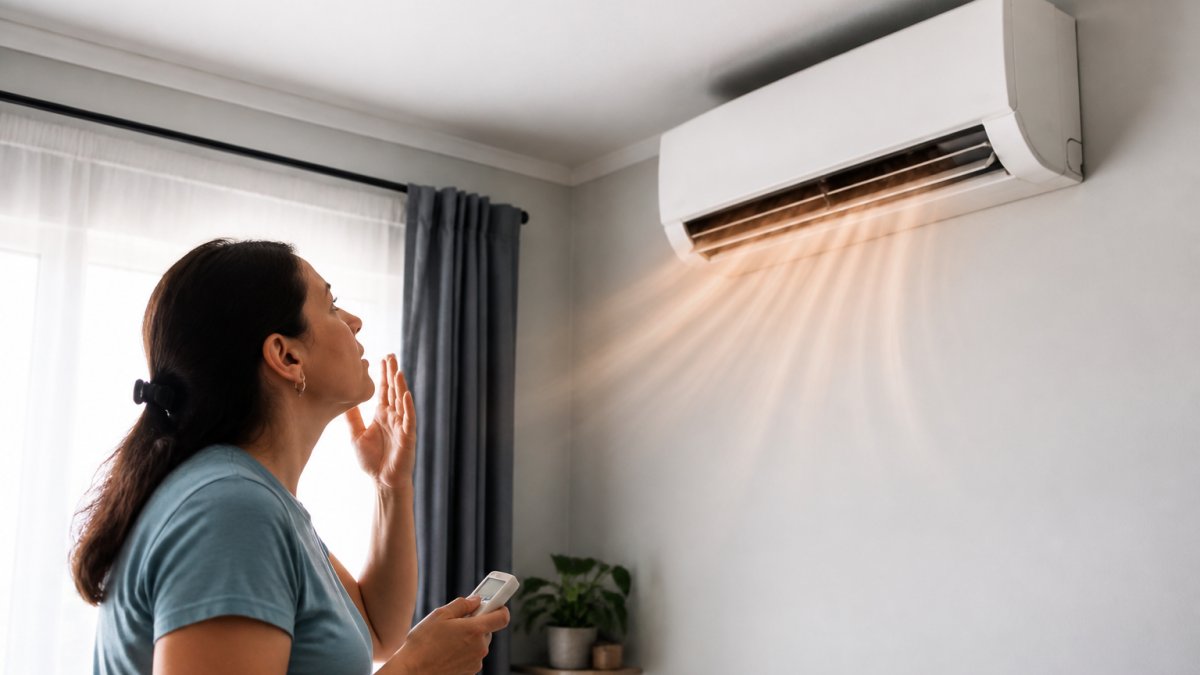
When you notice your AC blowing warm air in Florida, the cause is usually one of six things: a thermostat set wrong, a clogged filter, blocked airflow, a dirty outdoor unit, a tripped breaker, or low refrigerant. Most are safe to check yourself in under an hour. A few need a licensed technician.
Below, we walk through a safe, ordered check so you find the real problem instead of guessing.
Start with the safest checks first. Turn the system off at the thermostat before you touch anything else. Then work down this list:
- Thermostat mode and set point
- Air filter condition
- Supply and return vents
Watch out: never open the electrical panel or poke at refrigerant lines yourself. Those two steps belong to a licensed tech.
Here are the six common causes of warm air and the order to check them in.
| Check | What to look for | Who should do it |
|---|---|---|
| Thermostat mode and set point | Set to COOL, at least 3 degrees below room temp | Homeowner |
| Air filter condition | Clogged filter choking the return | Homeowner |
| Supply and return vents | Open and unblocked by furniture or rugs | Homeowner |
| Outdoor condenser unit | Clear debris, two feet of clearance, fan spinning | Homeowner, visual only |
| Breaker panel | Tripped switch, reset once only | Homeowner |
| Ice on the indoor coil | Frost or ice signaling airflow or refrigerant issue | Licensed technician |
Thermostat Settings and Cooling Mode: The First Thing to Rule Out
A thermostat in the wrong mode is the most common and cheapest fix.
Next, check the batteries and the schedule. A dead battery or an override left on can leave you with a fan blowing room-temperature air all day.
One insider note: a thermostat mounted on a sun-hit wall reads high and shuts cooling off early. If the room feels hotter than the display says, that gap is your clue.
Dirty Air Filter AC Symptoms: When a Clogged Filter Causes Warm Air
Dirty air filter AC symptoms show up fast: weak airflow from the vents, a system that runs nonstop, a musty smell, and air that feels cool at the register but warm by the time it reaches the room.
In Florida, filters load up quicker than most guides admit. Dust, pollen, and near-year-round runtime mean a filter that lasts three months up north may need changing every 30 to 60 days here.
- Check the filter monthly in summer
- Replace 1-inch filters every 30 to 60 days
- Use the size printed on the old filter's frame
If you hold the filter up to a light and can't see through it, it's done. Swap it and recheck the airflow before moving on.
AC Running but Not Cooling: Airflow, Outdoor Unit, and Electrical Checks
When the system runs but the house will not cool, the cause sits in one of three zones: restricted airflow indoors, a blocked or dead outdoor unit, or an electrical fault. Work them in that order, because each check is safer and cheaper than the next, and each one rules out a whole category before you spend a dollar.
Step 1: Airflow indoors (safe, free, do this first)
Walk every room and confirm each supply and return vent is open and unblocked. Furniture, rugs, curtains, and closed dampers starve the system. A return that is carpeted over or blocked by a sofa is a common find.
Observable clue: weak airflow at the registers with air that feels cold right at the vent but warm by the time it crosses the room points to a filter, duct, or damper problem, not refrigerant.
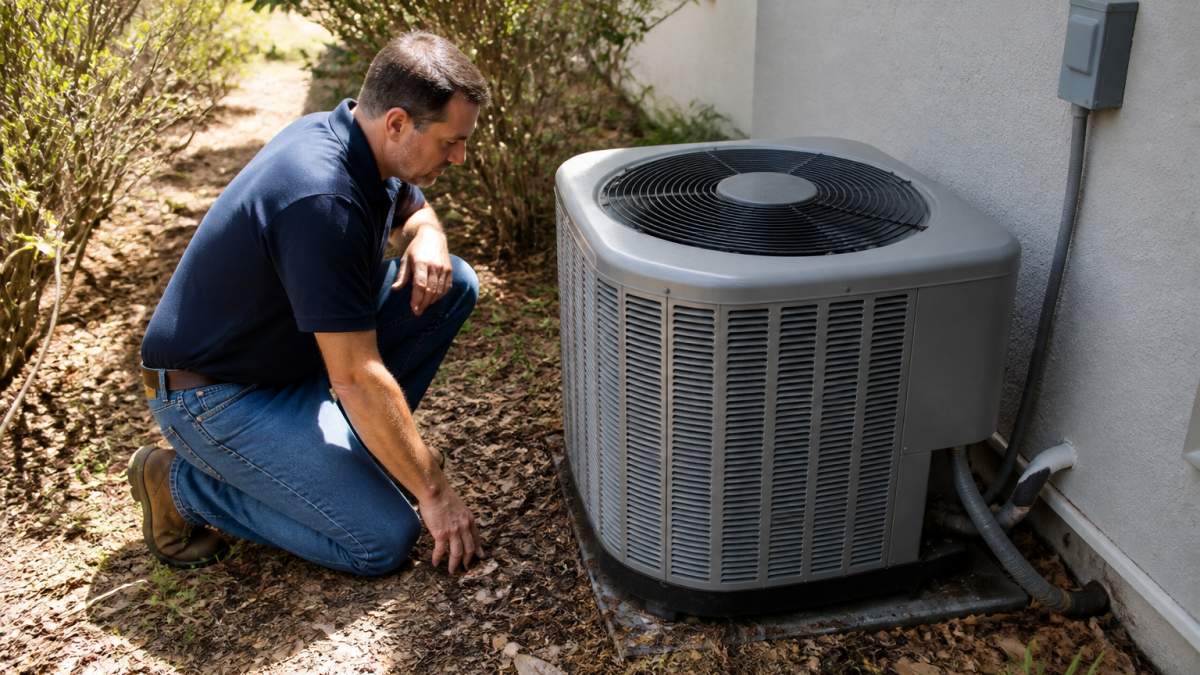
Step 2: Outdoor condenser unit (safe, visual only)
Look at the condenser. Clear leaves, grass clippings, and debris from around the base and off the top grille, and keep at least two feet of clearance. The fan should spin and blow hot air upward.
Observable clue: a spinning fan that blows only mildly warm air, paired with strong indoor airflow that never gets cold, leans toward refrigerant or compressor trouble rather than airflow.
Step 3: Electrical (one reset only)
Find the breaker for the AC, indoor and outdoor, and check for a tripped switch. A tripped breaker can leave the indoor fan running while the condenser sits dead. Reset it once. If it trips again, stop. Something is shorted or drawing too much current, and repeated resets risk damage.
How to tell airflow problems from refrigerant or compressor faults
Use the vents as your readout. Weak airflow with a cold register usually means a filter, duct, or damper issue. Strong airflow that never gets cold points toward refrigerant or the compressor. That single distinction keeps you from paying for the wrong repair and tells the technician what to expect before the truck arrives.
Frozen AC Evaporator Coil Signs and What They Tell You About Refrigerant
Two things cause a freeze. Restricted airflow is one, and low refrigerant is the other. Low refrigerant usually means a leak, and a leak never fixes itself. Topping off the charge without finding the leak just buys you a few weeks.
Shut the system off and let the ice melt before anyone inspects it. Running a frozen system can damage the compressor, and that's the most expensive part in the unit.
AC Repair Cost and When to Call a Licensed Technician
AC repair cost depends on the actual fault, the parts, and the system age, so any flat number you see online is a guess. What you can do is understand the factors that move an estimate up or down, and know when waiting costs more than calling.
What drives the estimate
- The fault itself. A clogged filter is a few dollars and five minutes. A refrigerant leak, a failed compressor, or a bad breaker sits at the other end of the range.
- Parts availability. Common capacitors and contactors are usually stocked; a compressor matched to an older system may take longer and cost more.
- System age and refrigerant type. Older equipment and certain refrigerant types carry higher parts and handling costs.
A technician has to diagnose before anyone can price the job honestly. Treat any quote given before diagnosis as a placeholder, not a commitment.
When to call a licensed technician
Call when any of these are true:
- The breaker trips again after one reset
- You see ice on the coil or lines
- The outdoor fan will not spin
What to do while you wait (protect people and equipment)
Florida heat turns a warm-air problem into a safety issue fast. If the system is running but not cooling, turn it off at the thermostat rather than letting the compressor strain for hours. Close blinds and curtains on sun-hit windows, run ceiling fans for air movement, and keep interior doors open so whatever cool air remains can circulate. Check on older adults, young children, and pets, and have a plan to move to a cooler space if the indoor temperature climbs.
Prevention tailored to a hot, humid climate
Most warm-air calls trace back to maintenance that slipped. Check the filter monthly during heavy-use months and replace 1-inch filters every 30 to 60 days. Keep the outdoor unit clear of debris and landscaping.
Launchpad Services offers same-day service appointments, upfront honest pricing, and free estimates with no call-center runaround. Our team is licensed and insured (FL CAC1822716), and our Comfort Club gives members priority service and discounts on maintenance.
Frequently Asked Questions
Should I turn off my AC if it is blowing warm air?
Yes. Shut the system off at the thermostat and, if you suspect an electrical or frozen-coil problem, at the breaker. Running an AC that is blowing warm air can stress the compressor, and a compressor is the most expensive part of the system to replace. Turning it off protects the equipment while you check the simple things, like the thermostat mode and the air filter, and it keeps the problem from getting worse before a technician arrives.
Can a dirty air filter make an AC blow warm air?
It can. A clogged filter restricts airflow across the evaporator coil, so the coil gets too cold and can freeze over. Once ice builds up, the system stops moving cool air and you feel warm air at the vents instead. Dirty air filter AC symptoms include weak airflow, ice on the indoor coil, and longer runtimes. In Florida humidity, filters load up faster, so check yours monthly during summer and replace it when it looks gray or matted.
Why is my AC running but not cooling the house?
An AC running but not cooling usually points to one of three things: restricted airflow from a dirty filter, blocked vents, or a clogged outdoor condenser coil; low refrigerant from a leak; or a failing compressor or capacitor. Start with the filter and the outdoor unit, since those are safe to check yourself. If airflow is strong but the air is warm and the outdoor unit is not running, that is an electrical or compressor issue that needs a licensed technician.
When should I call an HVAC technician for an AC blowing warm air?
Call a technician if the thermostat is set to cool and the filter is clean but the air is still warm, if you see ice on the indoor coil or refrigerant lines, if the breaker trips again after you reset it, or if the outdoor unit will not start. Refrigerant leaks and compressor faults require licensed diagnosis and cannot be fixed with a DIY repair. AC repair cost varies by the fault, so ask for an upfront quote before any work begins.
Your house shouldn't climb past 80 while the AC hums away doing nothing. Work the safe checks, then let a licensed tech handle the rest. Get started with Launchpad Services and book same-day AC repair in Palm Bay and Brevard County.
