How to Unclog an AC Condensate Drain Line Safely
Last Updated: November 1, 2026
Quick Summary
To unclog an AC condensate drain line safely, first turn off the thermostat and the breaker. Then vacuum the cleanout with a shop vacuum, let about one cup of distilled white vinegar sit for 30 minutes, and flush the condensate drain line with two cups of warm water. Restore power and confirm water drains freely.
- Turn off the thermostat and the breaker, and confirm the unit is dead before touching anything.
- Run a shop vacuum over the cleanout for 20 to 30 seconds to pull out debris.
- Let about one cup of distilled white vinegar sit for 30 minutes to break down biofilm.
- Flush with two cups of warm water, then run the system for 15 to 20 minutes to verify flow.
- Call a licensed technician if the clog returns or water backs up after cleaning.
Table of Contents
- Clogged AC Condensate Drain Line Symptoms to Watch For
- Tools and Supplies You Need to Clear the Drain
- Step-by-Step: How to Unclog an AC Condensate Drain Line Safely
- AC Drain Line Maintenance and How Often to Clean It
- Booking Your Next Drain Line Check With Launchpad Services
- Frequently Asked Questions
Clogged AC Condensate Drain Line Symptoms to Watch For
A clogged condensate drain line is one of the most common reasons an air conditioner stops working well. If you spot these signs in Suntree or nearby, you can get local AC repair help from our team.
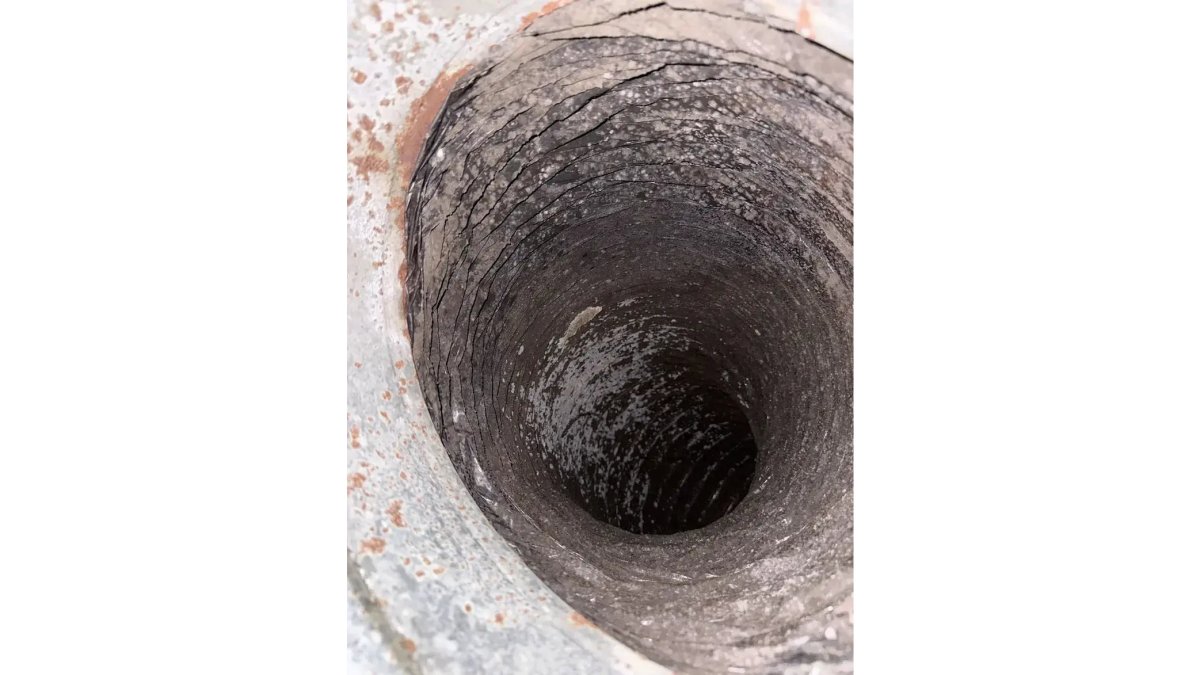
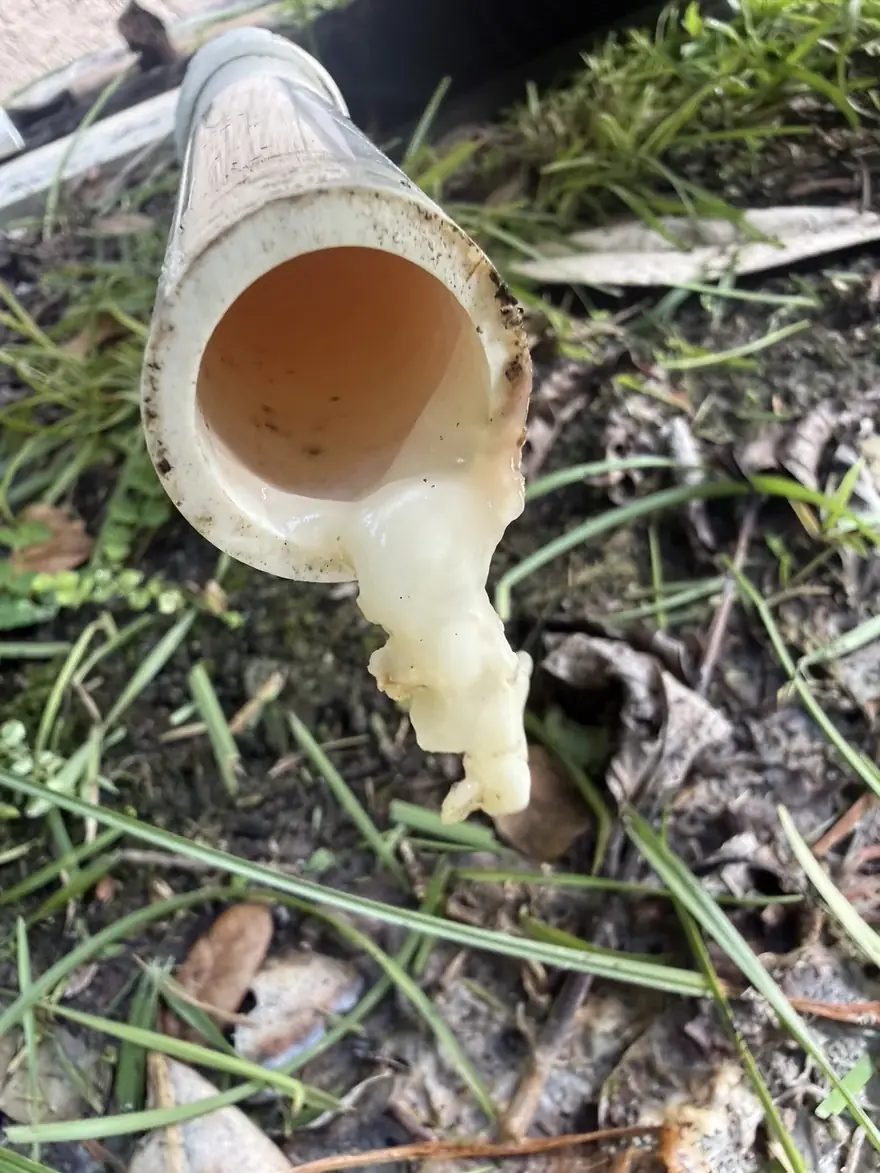
Most homes have a PVC drain line that carries condensation away from the evaporator coil. When algae, slime, or debris builds up inside it, water backs up. Common warning signs include:
- Water dripping or pooling near the indoor unit
- A musty or sour smell from the vents
- A float (safety) switch that shuts the system off
Watch out: if you see water spreading across a ceiling or wall, turn the system off at the thermostat and call a licensed technician before doing anything else.
Tools and Supplies You Need to Clear the Drain
A simple clog rarely needs more than a shop vacuum, a funnel, and a bottle of distilled white vinegar.
Cleaning tools
- A wet/dry shop vacuum with a hose narrow enough to seat over the cleanout opening
- A funnel or turkey baster for adding solution without splashing
- Distilled white vinegar (about one cup)
Safety and cleanup gear
- Nitrile gloves and eye protection, since drain water and slime can carry bacteria
- A towel, shallow bucket, or drip pan to catch water when you open the line
- A voltage tester or non-contact pen to confirm the air handler is dead before you touch it
What to skip, and why
Vinegar and warm water are gentle on PVC pipe, the drain pan, and the coil. To understand why humidity keeps overwhelming some systems, read why your AC can't keep up in Brevard County humidity.
Compressed air is the other tempting shortcut.
Step-by-Step: How to Unclog an AC Condensate Drain Line Safely
Work carefully and in order. Safety comes first, so do not skip the power step, and stop at any point where the drain access is unclear or water is spreading where it should not.
Turn Off Power Before You Start
Set the thermostat to off, then switch off the breaker that supplies the air handler. Confirm the unit is dead with a voltage tester or by listening for the blower to stop. If you are unsure which breaker controls the unit, stop and call a licensed technician rather than guessing.
Working around live electrical parts can cause serious injury. Do not touch wiring, the control board, or the float switch terminals while the power is on.
Find the Drain and Know Your Configuration
Where the drain lives depends on your system, and the access differs:
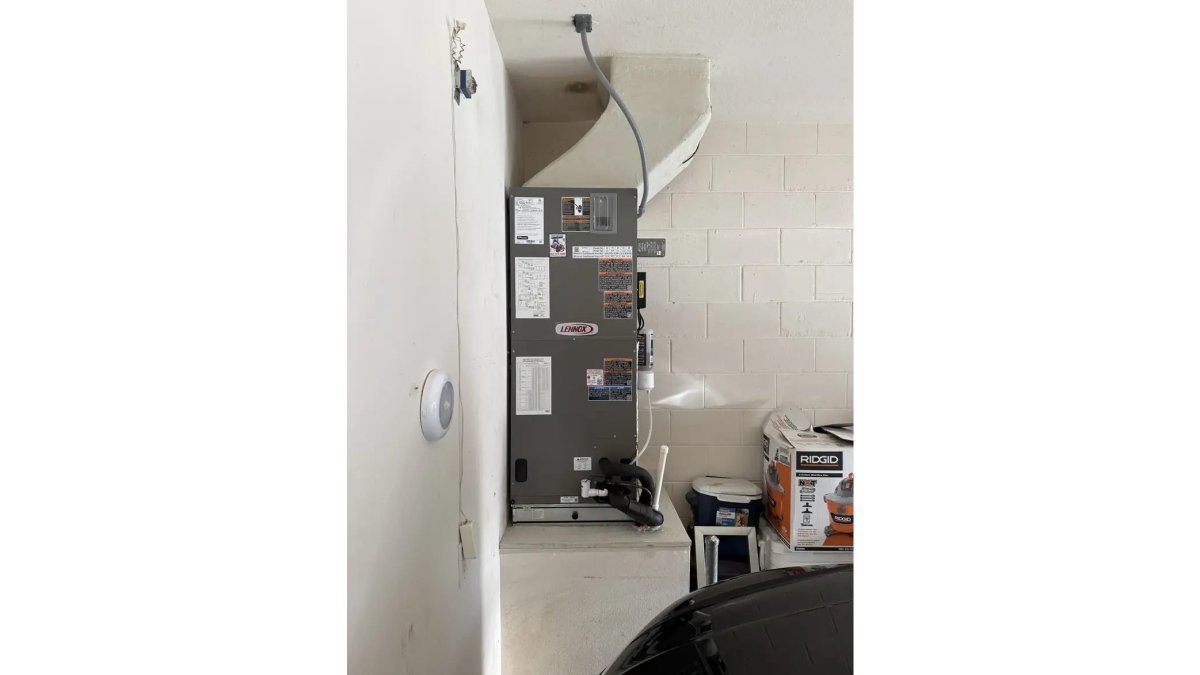
- Attic air handler (common in many Viera and Suntree homes): the drain line usually runs down through a chase to the exterior. Look for the cleanout tee near the unit and a secondary drain pan underneath. Attics are hot, so work in the cooler part of the day and bring a headlamp.
- Closet air handler (common in older homes): the unit sits in a closet with the drain exiting through a wall. The cleanout tee is often just above the pan, and space is tight, so a shop vac with a flexible hose helps.
- Horizontal air handler: the drain pan sits under the coil and the line exits sideways. Confirm you are looking at the primary drain, not the secondary, before you open anything.
Distinguish the primary drain (carries normal condensation), the cleanout tee (your access point), and the secondary drain (the backup that should only carry water if the primary is blocked). If the secondary is running, the primary is clogged and the pan may already be full.
Check the Pan and Float Switch First
Before you clean, look in the secondary drain pan. If it holds standing water, the float (safety) switch may have already shut the system off, which is why the AC stopped. Do not reset the switch and restart the system until the clog is cleared, or the pan will overflow again. If the pan is full, have towels and a bucket ready before you open the line.
Clear the Blockage and Flush the Line
- Remove the cleanout cap and place the shop vacuum hose over the opening. Run the vacuum for about 20 to 30 seconds to pull out debris. If you see water backing up instead of draining, stop and reassess.
- Pour about one cup of distilled white vinegar into the drain pan or cleanout, then let it sit for 30 minutes to break down biofilm.
- Flush the line with two cups of warm water using a funnel so the solution flows through rather than splashing.
- Verify the flow: watch the exterior drain outlet for a steady trickle, then restore power and run the system for 15 to 20 minutes. Water should drain freely and the pan should stay dry.
When Cleaning Does Not Work
If the clog returns within a few days, or water still backs up after cleaning, the problem may be deeper in the line, in the pan itself, or in the pipe slope. A decision tree helps:
- Clog returns quickly: likely biofilm regrowth or a partially blocked line. A technician can rod the line and check the slope.
- Water backs up immediately: the blockage is close to the pan or the fitting is damaged. Stop and call.
- Secondary drain is running: the primary is blocked and the pan may be near overflow. Stop and call.
Clearing a clogged drain comes down to a few key steps, each with its own timing:
| Step | What to do | Time or frequency |
|---|---|---|
| Turn off power | Set thermostat to off and switch off the breaker | Before you start |
| Check the pan and float switch | Look for standing water in the secondary pan | Before cleaning |
| Clear the blockage | Run a shop vacuum over the cleanout for 20-30 seconds | 20-30 seconds |
| Let vinegar sit | Pour about one cup of distilled white vinegar into the pan or cleanout | 30 minutes |
| Flush the line | Add two cups of warm water through a funnel | One flush |
| Verify flow | Restore power and run the system | 15-20 minutes |
| Routine inspection | Check the drain line for clogs and standing water | At least twice a year |
AC Drain Line Maintenance and How Often to Clean It
Routine care prevents most clogs. Inspect the drain line at least twice a year, ideally before the cooling season and again in late summer when humidity is highest. Brevard County's heat and humidity make this especially important.
A maintenance plan can take the guesswork out of this. Our Comfort Club maintenance plans include two seasonal visits a year, one free service call per year, and free drain cleaning when a float safety switch is installed.
Booking Your Next Drain Line Check With Launchpad Services
If your drain line keeps clogging or you see water near the indoor unit, a professional inspection is the safest next step. Our standard diagnostic is $99, and we give you a written, upfront price before any work starts.
Palm Bay and Brevard County homeowners can book AC repair online or call us at 321-375-5582. Launchpad Services is a locally owned, licensed and insured HVAC contractor (FL License CAC1822716). Our service is out of this world.
Frequently Asked Questions
What should you use to clean an AC condensate drain line?
Most homeowners start with a wet/dry shop vacuum to pull out the blockage, then flush the line with water. Some people add a diluted solution of distilled white vinegar to help break up algae and slime. Avoid pouring harsh chemicals into the line, because they can damage PVC components and the drain pan. If the clog does not clear after a gentle flush, stop and call a licensed technician. Launchpad Services can diagnose the cause and give you a written, upfront price before any work begins.
Can a clogged AC drain line cause water to leak indoors?
Yes. When the condensate drain line backs up, water can fill the drain pan and overflow onto the floor, ceiling or nearby walls. Many systems include a float (pan) safety switch that shuts the air conditioner off when the pan fills, but not every system has one. Check the area around your indoor unit regularly for standing water, staining or a musty smell. If you see water, turn the system off at the thermostat and call for service.
How often should an AC condensate drain line be cleaned?
Many homeowners inspect the drain line at the start of cooling season and again during the mid-summer heat, since humid Brevard County weather encourages algae growth. Heavier use and nearby vegetation can speed up buildup. A seasonal tune-up is a good time to have the line checked as part of routine maintenance. Launchpad Services offers Comfort Club maintenance plans from $24.99/month, which include two seasonal tune-ups per year. Limits apply.
When should you call an HVAC technician for a clogged AC drain?
Call a licensed technician if the clog does not clear after a gentle flush, if water keeps appearing near the indoor unit, or if the system shuts off repeatedly. Refrigerant, electrical and gas work must be handled by a licensed professional, so do not attempt repairs beyond clearing the drain line and resetting a breaker once. Our standard diagnostic is $99, and we give a written, upfront price before any work starts. Call 321-375-5582 to schedule service.