Avoiding HVAC Repair Scams in Florida: 4 Steps to Verify
Last Updated: November 12, 2026
Quick Summary
Avoiding HVAC repair scams in Florida starts with asking for the contractor's license number in writing and looking it up by number in the state database. Then match the license holder's name and status, confirm insurance by calling the number on the certificate, and check complaint history for a pattern.
- Search the license number, not the company name, because scammers copy names.
- A contractor who dodges the license number request has already answered your question.
- System replacements in Florida generally require a permit, and a legitimate contractor pulls it.
- A replacement quote on the first visit with no repair option offered is a red flag.
- Ask what the technician tested and what the readings were before any panel opens.
Table of Contents
- How to Verify a Florida HVAC License Before You Book
- Questions to Ask an HVAC Technician Before Any Repair
- Common AC Repair Red Flags and the Importance of Written HVAC Estimates
- Frequently Asked Questions
How to Verify a Florida HVAC License Before You Book
HVAC repair scams start with a simple gap: the homeowner never checks who is standing in the driveway. In Florida, that check takes about five minutes, every licensed contractor carries a state license number anyone can look up.
Launchpad Services holds FL License CAC1822716, and we will show it before we touch a system. Here is the exact process we tell Brevard County homeowners to run on any contractor, including us.
- Ask for the license number in writing. A text or email is fine.
- Look it up in the state database. Search the number, not the company name, scammers copy names.
- Match the name and status. The license holder should match the person or company quoting your repair.
- Confirm insurance. Ask for a certificate and call the number on it.
- Check the complaint history. A pattern matters more than one bad review.
A contractor who dodges step one has answered your question already. Walk away.
Permits matter too. System replacements in Florida generally require a permit, and a legitimate contractor pulls it.
Once the license checks out, you still want a team you can actually book. Our HVAC repair team in Palm Bay serves homeowners across Brevard County, and you can read how we work before you call.
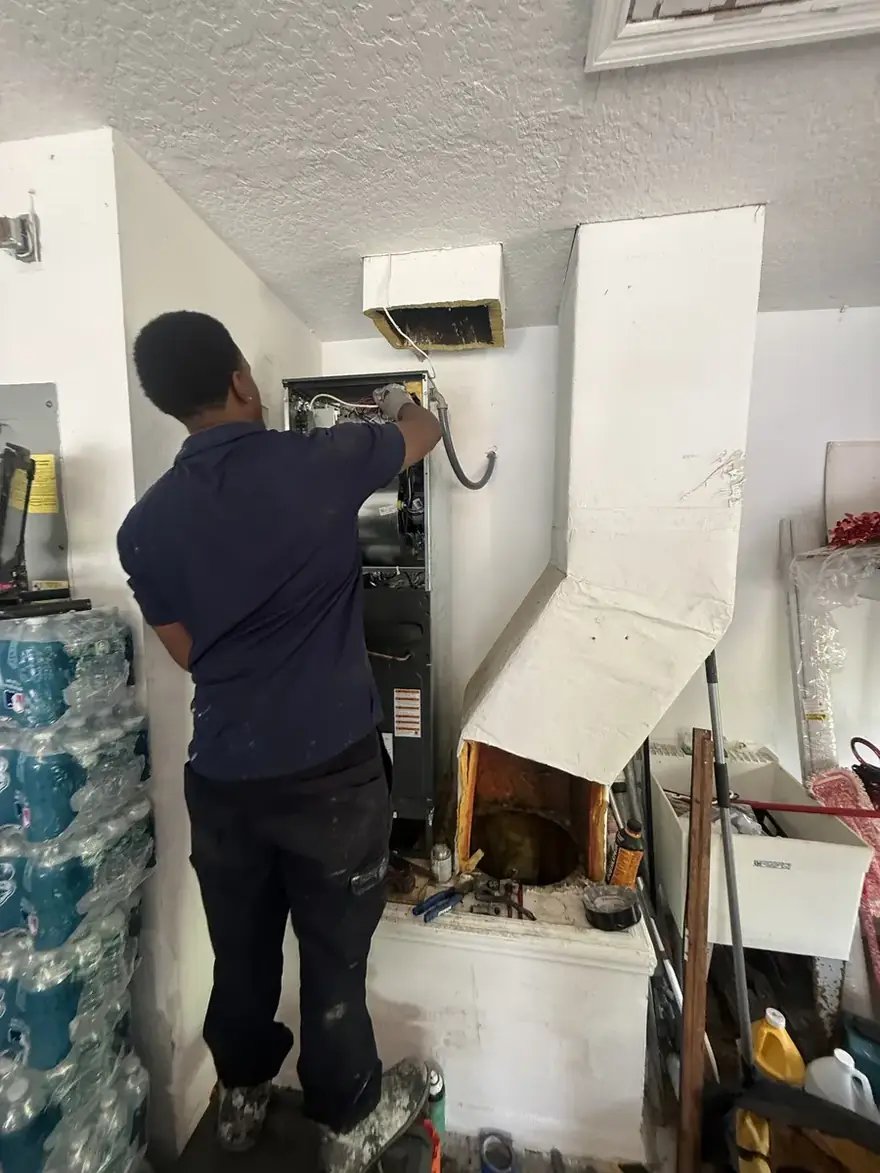
Here is the five-step license check we tell Brevard County homeowners to run on any contractor, including us.
| Step | What to do |
|---|---|
| 1 | Ask for the license number in writing |
| 2 | Look it up in the state database by number |
| 3 | Match the license holder name and status |
| 4 | Confirm insurance with a certificate and call |
| 5 | Check the complaint history for a pattern |
Questions to Ask an HVAC Technician Before Any Repair
The right questions do two things: they slow down a fast pitch, and they force a real diagnosis into the open. A technician who welcomes them is usually the one you want.
Ask these before anyone opens a panel:
- What did you test, and what were the readings? A real diagnosis has numbers behind it.
- Is this part actually failed, or just old? Age alone is not a failure.
- What happens if we do nothing for a week? Honest answers include "probably nothing."
- Can I see the failed part? You paid for the diagnosis.
- Will I get this in writing before work starts? No written price, no approval.
- Who pulls the permit if this turns into a replacement?
- Is there a warranty on this repair, and for how long?
You can extend this list with more vetting questions from our guide on how to identify honest AC repair before you book.
Watch out: a technician who cannot explain the diagnosis in plain words, or who gets irritated when you ask, is telling you something. The problem is not your questions.
Common AC Repair Red Flags and the Importance of Written HVAC Estimates
The most expensive scams are not the ones that overcharge for a part. They are the ones that sell you a system you did not need. A written HVAC estimate is your best defense, because it forces every claim onto paper where you can compare it.
A legitimate diagnosis should include the complaint you reported, the tests performed, the readings, the failed component, and a clear repair recommendation. If any of those are missing, ask for them before you agree to any work.
Red flags to watch for:
- A replacement quote on the first visit, with no repair option offered.
- A claim of a refrigerant leak with no leak test shown to you.
- A price that changes once the technician is inside.
- Cash-only payment demanded upfront, before any work.
- Pressure to sign today because "the price goes up tomorrow."
- No written estimate, no contract, no warranty terms.
Green flags look quieter. A fixed diagnostic fee. A written price before work starts. A repair option next to the replacement option. A contractor who says "let me test that" instead of "you need a new unit."
Skipping tune-ups can save money now, but a neglected system gives a salesman more to point at later.
Before you sign anything, run the estimate through our 5 steps to verify an HVAC repair estimate. And if a replacement quote feels sudden, our guide on 7 signs an AC replacement quote is unnecessary walks through the cases where a repair is the right call.
Half of the homeowners in that survey were ready to skip maintenance. Scammers count on exactly that. At Launchpad Services, we diagnose first and hand you a written, upfront price before any work starts. Our $99 diagnostic covers the testing, and our Comfort Club plans start at $24.99 a month with two seasonal tune-ups, priority service and 15% off repairs, limits apply. Call 321-375-5582 or book service online and get a straight answer about your system.
Frequently Asked Questions
What are the most common signs of an HVAC repair scam?
Watch for a technician who diagnoses a refrigerant leak without testing, recommends replacing functional parts, quotes a price far below the local norm, or pushes a full system replacement before explaining the repair options. Pressure to pay upfront in cash or to sign before you read the estimate are also warning signs. A legitimate contractor inspects the system, documents findings, and gives you a written, upfront price before any work starts.
How can I verify if an HVAC contractor is licensed in Florida?
Ask for the license number and look it up on the Florida Department of Business and Professional Regulation database. Confirm the license is current, matches the company name, and covers the type of work quoted. Ask for a certificate of insurance too. Launchpad Services holds FL License CAC1822716, and we are happy to show it before we start.
Why should I be wary of extremely low-priced AC tune-up offers?
A tune-up priced far below the market can be a door-opener for added repairs you did not ask for. The low price gets a technician inside, then the visit turns into a sales call for parts or a new system. Ask what the tune-up includes in writing and whether the price changes after the inspection. Cheap offers can be more tempting when budgets are tight, so read the fine print.