How to Fix an AC That Buzzes But Won't Start
Last Updated: October 30, 2026
Quick Summary
An AC that is buzzing but not starting usually means electricity is reaching the unit while a motor or part cannot turn, often because of a weak capacitor, a seized fan motor, or a failing contactor. Shut the system off rather than repeatedly resetting it, and schedule a licensed technician to diagnose the problem.
- A steady hum means power is reaching the unit but a part is not turning.
- Try turning the outdoor fan blade by hand with the power off; if it will not move, stop and call a technician.
- Capacitors can hold a dangerous charge even when power is off, so leave capacitor work to a licensed technician.
- A breaker that trips again right after a reset means you should leave it off and call for service.
- Our standard diagnostic is $99, and we give a written, upfront price before any work starts.
Table of Contents
- Why Your AC Buzzes But Won't Start
- AC Buzzing but Fan Not Spinning: The Usual Suspects
- AC Capacitor Failure Symptoms to Look For
- Why an AC Breaker Keeps Tripping and What It Means
- Booking a Diagnostic Before Anything Else Fails
- Frequently Asked Questions
Why Your AC Buzzes But Won't Start
A unit that is buzzing but not starting is a common reason homeowners across Brevard County call for AC repair. The noise is a clue. It tells you the compressor or fan motor is trying to run but cannot get the power or the push it needs.
At Launchpad Services, we diagnose this problem in homes across Brevard County. The fix is rarely guesswork. It starts with understanding what the buzz means and where it comes from.
What the buzz is telling you
A steady hum usually means the unit is buzzing but not starting, which tells us electricity is reaching it while a part is not turning. The sound often comes from a motor that is stuck, or from electrical parts that are struggling to start the motor.
Common signs include:
- A loud hum when the thermostat calls for cooling
- The fan not spinning, or spinning very slowly
- The unit clicking, then going silent
- A breaker that trips a few seconds after the buzz starts
Do not keep resetting the system over and over, since each failed start puts extra strain on the components.
Buzzing from the outdoor unit versus the indoor air handler
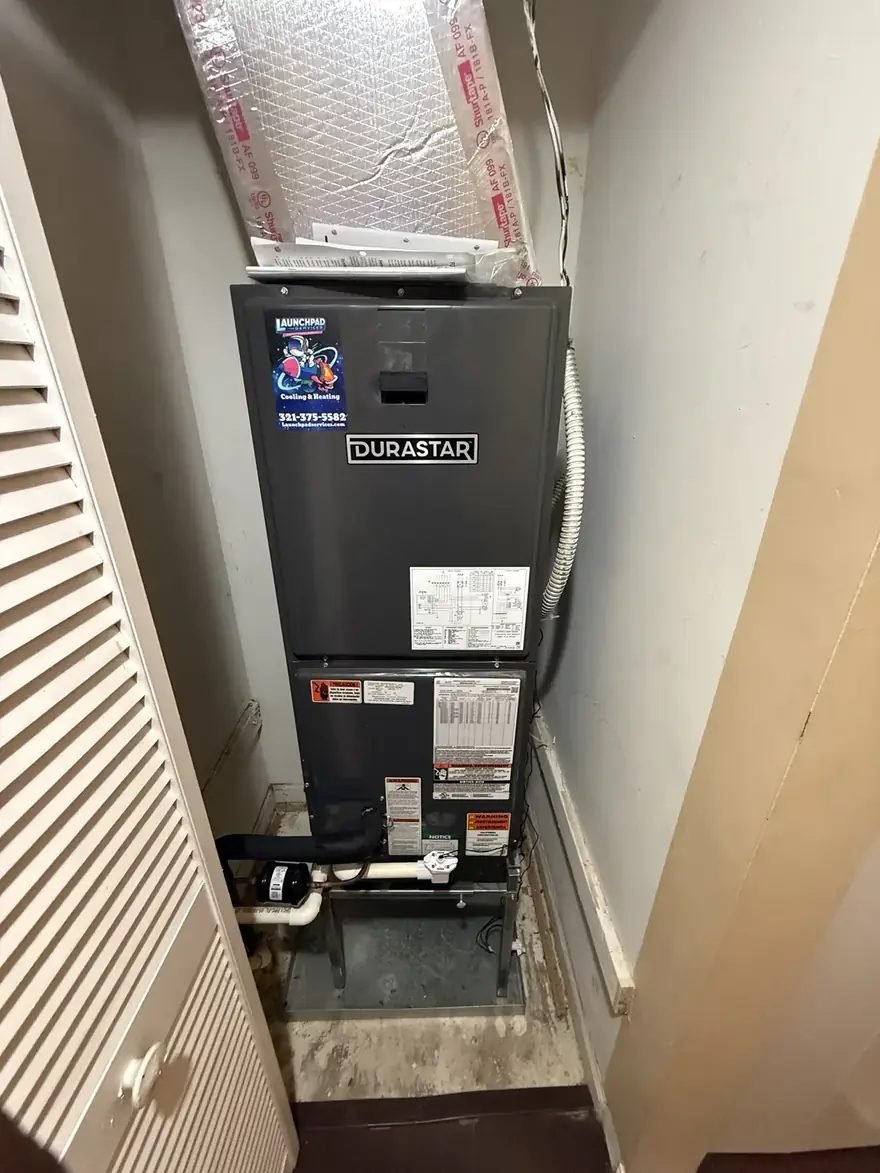
Where the sound comes from matters. A buzz from the outdoor condenser usually points to the compressor, the outdoor fan motor, the start capacitor or the contactor. A buzz from the indoor air handler or furnace area more often points to the blower motor, a loose panel or a failing control part.
Walk outside and listen near the condenser. If you want to compare what warm-air symptoms look like, see same-topic article on AC blowing warm air in Florida. If the buzz is loudest there, the problem is likely outside. If the air inside is weak and the noise comes from inside the air handler, the blower side needs a look.
AC Buzzing but Fan Not Spinning: The Usual Suspects
When the buzz comes with a fan that does not spin, a few electrical and mechanical parts are the usual suspects. Knowing them helps you describe the problem clearly when you call for service.
Capacitor failure and seized fan motors
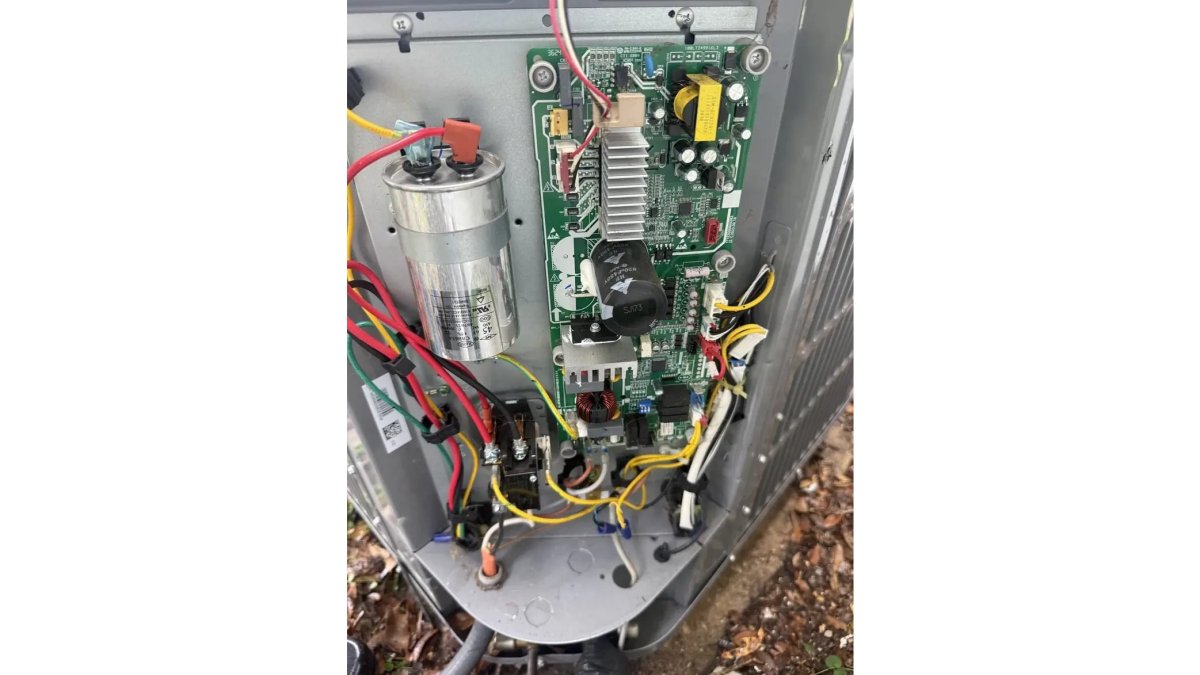
The capacitor gives the motors an electrical push to start. When it weakens, the motor hums but cannot get going. A seized fan motor does the same thing, because the bearings are stuck and the motor cannot turn the blade.
A quick check you can do safely: with the power off at the disconnect, try to spin the outdoor fan blade by hand. It should turn freely. If it will not move, stop and call a technician. Capacitors can hold a dangerous electrical charge even when the power is off, so leave capacitor work to a licensed technician.
Contactors, relays and compressor start problems
The contactor is an electrical switch that sends power to the compressor and fan. When its contacts are pitted or worn, the unit may buzz because the contactor is clicking but not making a solid connection. A failing starting relay can cause the same problem with the compressor.
A compressor that cannot start often hums hard and then shuts off. This is a serious symptom. Running a stuck compressor for long periods can damage it, so shut the system off and schedule service.
Here is a quick reference to the usual causes, what each one looks like, and the right next step.
| Suspect | What it looks like | What to do |
|---|---|---|
| Capacitor failure | Hums, then shuts off, or starts slowly | Schedule a licensed technician |
| Seized fan motor | Fan will not turn by hand | Stop and call a technician |
| Worn contactor | Clicks but no solid connection | Shut system off and book service |
| Failing starting relay | Compressor hums hard, then stops | Shut system off and book service |
| Stuck compressor | Loud hum, shuts off repeatedly | Stop running it and schedule service |
AC Capacitor Failure Symptoms to Look For
Capacitors are the most common cause of this problem, so it helps to know the warning signs. A weak capacitor often gives you a few clues before it fails completely.
Watch for these symptoms:
- The outdoor fan starts slowly or needs a hand push
- The unit hums briefly before shutting off
- The system runs but the air is weaker than usual
- The buzz gets louder over time
Look at the capacitor's appearance only from a safe distance. A swollen top or oil leak is a clear sign it needs replacing. Only a licensed technician should test or replace it.
!A licensed HVAC technician in a work uniform inspecting a residential outdoor condenser unit in a sunny Florida backyard, with a multimeter in hand
Why an AC Breaker Keeps Tripping and What It Means
A breaker that trips every time the AC tries to start is protecting your home from damage. It usually means the system is drawing too much current because a part is stuck, shorted or failing.
You can safely reset the breaker once. If it trips again right away, leave it off and call for service. Repeated resets can overheat wiring and create a fire risk. Breaker trips are never something to ignore, especially with a buzzing unit.
Booking a Diagnostic Before Anything Else Fails
A buzzing AC that will not start should be checked soon. The longer a failing part runs, the more it can damage nearby components, and a small repair can turn into a larger one.
Our standard diagnostic is $99. We diagnose first and give you a written, upfront price before any work starts. If you are a Comfort Club member, the service call is $49. Comfort Club plans start at $24.99 per month and include priority service and 15% off repairs. Limits apply.
Replacement and new system costs depend on the equipment, the size of the home and what the diagnosis finds. We give free in-home estimates for new systems, and financing is available.
Call us at 321-375-5582 or book service online. If you prefer, contact Launchpad Services directly. You can also get same-day AC repair in Palm Bay when the system is down.
Frequently Asked Questions
Why is my AC making a buzzing noise but not starting?
A buzzing AC that will not start usually means the compressor or fan motor is getting power but cannot turn over. Common causes include a weak or failed start capacitor, a worn contactor, a seized fan motor bearing, or a compressor that is struggling to start. The buzz is the electrical hum of a motor trying to run. Because the cause is electrical, it should be diagnosed by a licensed technician before anyone tries to force the system to run.
Is it safe to run an AC that is buzzing but not starting?
It is not a good idea to keep trying to start the system repeatedly. Each failed start pulls a large current spike and can overheat the compressor or damage the contactor. Turn the system off at the thermostat and at the outdoor disconnect, and call for service. A single reset of a tripped breaker is reasonable, but do not reset it again and again.
Can a bad capacitor make an AC buzz but not start?
Yes. A start or run capacitor stores the energy that gives the compressor and fan motor their initial push. When it weakens or fails, the motor can hum or buzz without turning. Capacitors are a common, relatively inexpensive repair, but replacing one involves high-voltage components, so it should be done by a licensed technician. We give a written, upfront price after diagnosis, before any work starts.
Should I turn off my AC if it is buzzing?
Yes, turn it off at the thermostat if it is buzzing and not starting, and avoid repeated restart attempts. Continued cycling can burn out the compressor, which is one of the most expensive parts of the system. Once it is off, schedule a diagnostic so a technician can find the root cause.